

What Is Website Personalization and How It Drives Revenue

[ SUMMARIZE WITH AI ]
[ FREE CRO TEARDOWN ]
Find the 3 biggest revenue leaks on your store.
Every day a conversion leak goes unfixed, you're paying for traffic that doesn't buy. Get a 5-minute Loom through your PDP, cart, and checkout, with mockups of the fixes. No pitch.
Get My TeardownWebsite personalization creates a unique, custom-tailored shopping experience for every visitor. Instead of one generic homepage, you dynamically change the content, offers, and product suggestions based on who the visitor is, how they found you, and what they do on your site. For high-growth ecommerce brands, this isn't a feature; it's a core revenue driver.
Why Personalization Is Your New CRO
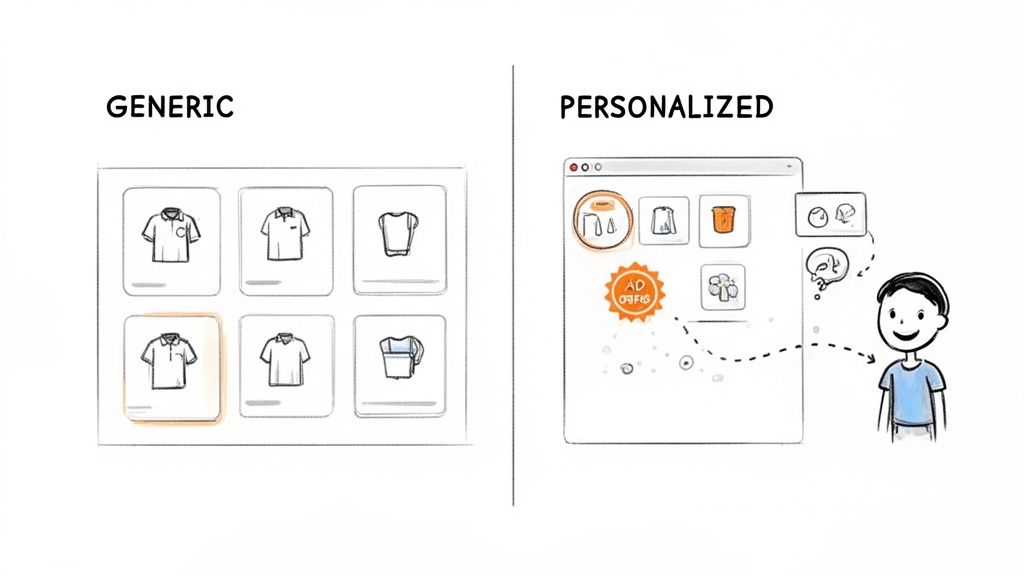
Imagine walking into your favorite local shop, and the owner immediately points you toward a new arrival they know you'll love. That's what personalization does for your online store. This approach transforms your website from a static, one-size-fits-all brochure into an intelligent sales assistant that adapts in real time, closing the gap between expensive ad clicks and your bottom line.
From One-Size-Fits-All to One-to-One
Old-school conversion rate optimization (CRO) was about finding the single "best" version of a page through A/B testing. The problem? Your "best" page for a first-time visitor from a TikTok ad is completely different from the "best" page for a loyal VIP customer shopping on their laptop.
The data confirms this. A staggering 80% of consumers are more likely to make a purchase when brands offer personalized experiences. A generic site actively leaves money on the table.
Personalization is a hyper-fast feedback loop between user activity and personalized online experiences. User activity generates event data which is processed by a personalization engine, which makes personalized content available to the frontend application.
The goal is to stop treating every visitor the same and deliver an experience that feels relevant to their journey. That’s when you see meaningful lifts in conversion and profit. As Intelligems founder Drew Marconi explained in a recent podcast episode on personalization, even small, targeted tweaks can drive massive revenue gains.
Key Benefits for Ecommerce Brands
For marketing managers trying to scale, the impact is direct and measurable:
- Increased Conversion Rates: Showing the right person the right offer at the right time is the most direct path to growth.
- Higher Average Order Value (AOV): Smart, personalized product recommendations and upsells help customers discover more products, leading to bigger carts.
- Improved Customer Loyalty: A shopping experience that feels made just for them builds a powerful connection that boosts lifetime value.
- Better Ad Spend Efficiency: Matching your landing page experience to the ad that brought the visitor there makes every click count and improves your Return on Ad Spend (ROAS).
Why Your Generic Website Is a Leaky Bucket for Ad Spend
If you're spending over $50,000 a month on ads, a generic, one-size-fits-all website isn't a missed opportunity; it's actively burning your cash. Imagine your ad spend is water you're pouring into a bucket. A non-personalized site is a bucket riddled with holes, letting high-intent visitors slip right through because the landing experience doesn't match the ad creative.
This disconnect is a direct hit to your Return on Ad Spend (ROAS). You spend a fortune to bring in traffic from Meta, Google, and TikTok, then welcome everyone with the same homepage, offers, and messaging. It's like running a targeted ad for winter coats and dumping the user on a landing page full of summer swimwear. That jarring experience kills their momentum and wastes the click you paid for.
The Financial Cost of a Mismatched Experience
The path from an ad click to a conversion is fragile. When someone clicks your TikTok ad showing a viral product, they expect to see that exact product the second the page loads. If they land on a generic collection page, you’ve created friction. Now they have to hunt, and most won't bother.
This mismatch is a serious financial leak. Every visitor who bounces because of a generic landing page is a wasted acquisition cost. For a brand spending $100,000 per month on ads, even a small fraction of wasted clicks adds up to tens of thousands of dollars in lost revenue.
Personalization is the bridge between your ad channels and your website. It ensures the message, offer, and visuals stay consistent, protecting your profit per visitor and squeezing every drop of value out of your acquisition budget.
The data supports this as a core revenue driver. Brands that implement tailored digital experiences see consumer spending increase by around 38% on average compared to those that don't. That's a fundamental shift in your top line. You can see the full picture behind personalization's impact for yourself.
Protecting Your Profit Per Visitor
In today's crowded DTC market, profit per visitor is everything. A generic site forces you to play a game of averages, hoping one message resonates with everyone. Website personalization flips that model, letting you optimize the experience for specific, high-value segments.
Think about it. You can create completely different on-site experiences for:
- High-AOV traffic from Google Search Ads: Greet them with your premium products and bundles right away.
- Low-intent scrollers from TikTok: Show them the exact viral user-generated content they just watched in their feed.
- Returning customers from an email campaign: Welcome them back by name and show them new arrivals based on their purchase history.
Each of these tailored journeys is built to convert a specific type of visitor far more effectively than a generic page ever could. By matching the landing experience to where your visitors came from and what they want, you plug the leaks in your ad spend bucket and start turning more of those expensive clicks into profitable orders.
The Four Pillars of Ecommerce Personalization
Let's move beyond buzzwords and break down how website personalization actually works. It's not a single tactic; it's a strategy built on four distinct pillars. Understanding these allows you to stop guessing and start building targeted, high-impact experiences that speak directly to different shopper segments. This framework turns a vague idea into a set of clear levers you can pull to drive more profit from every visitor.
Without this tailored experience, a huge chunk of your ad spend goes down the drain. You pay to get people from Meta, Google, and TikTok to your site, only to lose them because the landing page doesn't match their expectations.
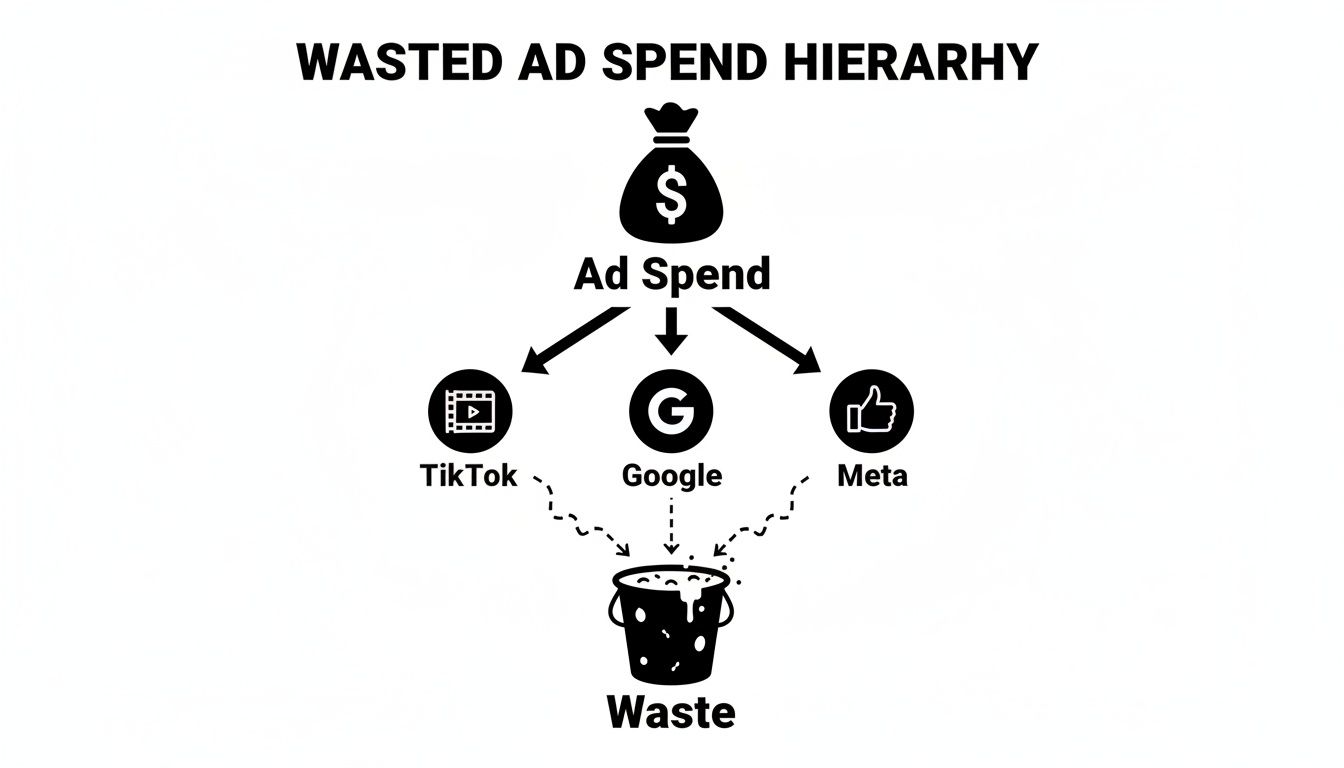
Personalization is how you plug the holes in your acquisition budget. Here's a look at the core types and how to apply them on a Shopify Plus store to impact your bottom line.
Personalization Types and Ecommerce Applications
| Personalization Type | What It Is | Shopify Plus Example |
|---|---|---|
| Segmentation | Grouping visitors by known, static traits like their location or traffic source. | Showing a "Free Shipping to Canada" banner only to visitors from Canadian IP addresses. |
| Behavioral | Adapting the site in real-time based on a visitor's actions during their session. | A shopper views three pairs of running shoes, so a hero banner pops up featuring your "Top Running Gear." |
| Lifecycle | Tailoring the experience based on a user's relationship with your brand (e.g., new vs. returning). | A VIP customer who has spent over $1,000 sees an exclusive "Early Access" link to a new collection in the main navigation. |
| Contextual | Modifying the experience based on their environment, like the device they're using or the specific ad they clicked. | A visitor from a TikTok ad for a specific summer dress lands on a page featuring that exact dress, not your generic homepage. |
By layering these approaches, you create an experience that feels uniquely relevant and intentional for every visitor.
1. Segmentation
Segmentation is your starting point. It’s about grouping visitors based on things you already know about them, like where they came from or their location. Think of it as your first tool for making your site more relevant.
Instead of showing everyone the same generic homepage, you can craft different welcomes.
- Traffic Source: Someone who clicks a Google Ad for "vegan leather bags" should land on a page filled with exactly that. Don't make them hunt.
- Location: Shoppers in NYC could see a banner about fast, local delivery, while visitors from Miami see your new swimwear collection front and center.
This is about creating instant alignment from the very first click.
2. Behavioral Personalization
While segmentation uses what you know, behavioral personalization reacts to what a visitor is doing right now. This is where your website stops being a static brochure and starts acting like a smart sales associate.
Here are a few common triggers:
- Pages Viewed: A user clicks on three different black dresses. Your site can then dynamically show a "Shop Black Dresses" promotion or recommend similar styles.
- Cart Additions: Someone adds a tent to their cart. This is the perfect moment to trigger a personalized upsell for a matching sleeping bag.
Behavioral personalization is all about capitalizing on in-the-moment intent. You're presenting the perfect next step right when they're most engaged, which massively increases the odds they'll convert.
3. Lifecycle Stage
A first-time visitor needs a very different experience than a loyal customer who has bought from you ten times. Personalizing by lifecycle stage acknowledges your history with them and tailors the journey to match.
- New Visitors: Welcome them with a clear offer, like 10% off their first purchase, to help them get over that initial hump.
- Repeat Customers: Greet them by name and show them what's new since their last visit, perhaps based on their past purchases.
- VIPs: Make them feel special. Offer exclusive access to new products, a unique discount code, or a direct line to customer service to reward their loyalty.
4. Contextual Personalization
This final layer adapts the experience to a visitor’s immediate environment: their device, the time of day, or the specific ad creative they clicked. It’s about being relevant to how and when they are shopping.
Shoppers don't just appreciate this; they expect it. Research shows that 71% of consumers expect companies to deliver personalized interactions.
The stakes are high. As many as 76% of customers get frustrated when they don’t find it. If you’re not personalizing, you’re not just missing an opportunity; you’re actively creating churn risk. You can discover more insights about these consumer personalization statistics to see just how important this has become.
Actionable Plays for Your High-Value Segments
Let's move from theory to action. Knowing what personalization is doesn't put money in the bank. This is where you implement specific, high-impact plays for the most valuable customer segments that nearly every D2C brand has. These are templates born from real-world testing, designed to create experiences that convert.
Before you dive in, you need a game plan. The first step is identifying your most important customer groups. If you're new to this, take the time to build a robust customer segmentation strategy first. Don't skip this. Once you know who you're talking to, you can start building experiences that speak their language.
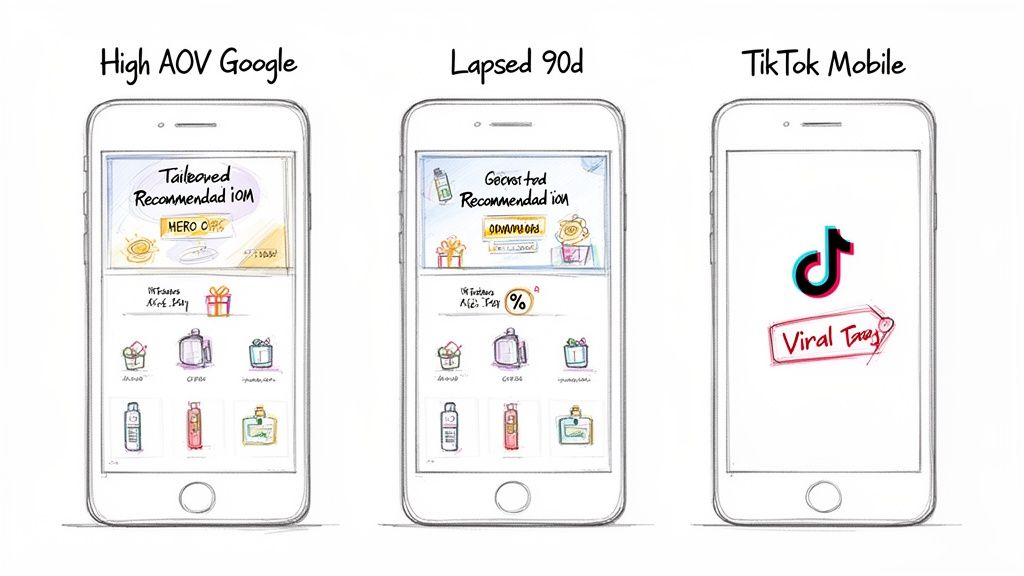
Playbook 1: High-Intent Visitors from Google Ads
Someone clicking a non-branded search ad is on a mission. They searched for a product, not for you. Your job is to prove their click was a good one and get them to that product, fast.
The Segment: First-time visitors from Google Search Ads who searched for something specific (e.g., "black leather crossbody bag").
The Problem: They land on your generic homepage, which is busy promoting a new collection. This ignores their search intent and creates a jarring disconnect, leading to a quick bounce.
The Personalized Experience:
- Hero Banner: Ditch the "Shop Our New Arrivals." Instead, use "The Perfect Black Leather Crossbody Bag Is Here." The main image? Your best-selling bag in that category.
- Product Recommendations: The first thing they should see is a product grid filled only with black leather crossbody bags, sorted by your top sellers. Remove distracting categories.
- Social Proof: Below that grid, show user-generated photos and reviews from customers raving about your bags.
- Offer: Instead of a generic 10% off, offer a pop-up for a free leather care kit with the purchase of any crossbody bag. It feels like a thoughtful gift, not a cheap discount.
This play creates a perfect, unbroken line from their Google search to your product page, reducing their mental effort and instantly telling them, "You're in the right place."
Playbook 2: Returning Customers Who Haven't Purchased in 90+ Days
This group already knows and likes you, but they've gone cold. A generic "We Miss You!" email isn’t going to cut it. You need to remind them why they liked you in the first place, and that has to happen on your site.
The Segment: Logged-in customers with a purchase history, but who have been inactive for 90 days or more.
The Problem: They come back to your site and see the exact same homepage as a first-time visitor. There’s no recognition of their past loyalty. You’re treating them like a stranger.
The Personalized Experience:
- Hero Banner: A simple, powerful message like, "Welcome Back, [First Name]. See What’s New Since You've Been Gone."
- Product Recommendations: Use their purchase history to power a "Recommended For You" section. If they bought a specific serum last time, show them the matching moisturizer.
- Offer: Reward their loyalty. "Enjoy $20 Off Your Next Order as a Thank You" often hits harder for returning customers than a percentage discount. It feels like real cash.
- Navigation: Add a "Just For You" link to your main menu, leading to a curated collection based on what you know they like.
This is all about rekindling a relationship. By showing you remember them and offering relevant suggestions, you’re not just selling; you’re reminding them why they chose you in the first place. That’s how you get that second or third purchase.
Playbook 3: Mobile Visitors from TikTok Ads
Traffic from TikTok is a different beast. Attention spans are short, and buying intent is often low. They were being entertained, not actively shopping. The goal is to mirror the ad experience so closely that they don't have a chance to get distracted.
The Segment: First-time mobile visitors clicking through from a specific TikTok campaign.
The Problem: They tap on an ad showing a cool product demo and land on your standard mobile homepage. It looks nothing like the video they just watched. They’re confused, disoriented, and gone in seconds.
The Personalized Experience:
- Hero Section: The top of the page should feature an auto-playing, silent video background. Use the exact same video from the ad or something visually identical.
- Headline: Make the connection obvious: "The Viral Favorite You Just Saw on TikTok."
- Product Focus: Turn the page into a mini-landing page focused on that one product. Hide the main navigation and other distractions. All eyes should be on a big, clear "Add to Cart" button.
- Social Proof: Instead of standard reviews, embed a feed of other TikTok videos from customers using the product. This maintains the look and feel of the platform they just left and builds instant trust.
For this segment, speed and consistency are everything. You have to create a seamless visual journey from the ad to your site, removing every possible point of friction to turn passive scrollers into impulse buyers.
Building Your Personalization Tech Stack and Process
A great personalization strategy requires two things: the right tools and a repeatable process. Without both, you're just throwing ideas at the wall. For Shopify Plus brands, this is about building a system that turns data into predictable revenue growth. Your existing tools - Shopify, Klaviyo, your ad platforms - are already sitting on a goldmine of data. The trick is to plug that raw material into a dedicated personalization engine to run tests and deliver unique on-site experiences.
The Essential Tech Stack Components
Building your stack doesn't mean ripping and replacing everything. It's about adding a specialized personalization tool that integrates smoothly with the platforms you already rely on. While some enterprise-level stacks involve complex tools like the Adobe Target integration, most Shopify Plus merchants get amazing results with a more focused setup.
Here's what that typically looks like:
- Your Core Data Sources: Shopify for purchase history, Klaviyo for email engagement, and your ad platforms like Meta and Google for traffic source data.
- A Personalization and Testing Engine: This is the heart of the operation. A tool like Intelligems is crucial for designing and launching sophisticated tests without needing custom code. You can check out how Intelligems powers advanced testing and personalization to see what's possible.
- Analytics and Measurement: Google Analytics is a given, but your personalization tool needs its own robust reporting to measure lift and prove impact accurately.
This stack lets you move fast, using the data you already own to fuel a high-tempo testing program.
A Disciplined Four-Step Process for Predictable Growth
Once your tools are in place, success is all about the process. The brands that win are the ones that follow a disciplined program, consistently shipping 2 to 4 (can be multivariate tests) validated tests every month. That's what creates compounding returns. A structured process is what bridges the gap between strategy and execution.
The best programs follow a simple, repeatable cycle:
- Identify High-Value Segments: Dive into your data. Who are your most profitable customers? You're looking for segments like "High AOV first-time buyers from Google" or "VIPs who haven't purchased in 90 days." Your goal is to map out 6 to 12 core segments.
- Formulate a Hypothesis: For each segment, create a clear, testable hypothesis. For example: "We believe that showing returning customers a 'Welcome Back' hero with product recommendations based on past purchases will increase AOV by 15%."
- Design and Launch the Test: Use your personalization tool to build the new experience. This could be as simple as changing a headline or as complex as swapping out product grids or testing a free gift against a discount.
- Measure and Validate: Measure the results with multi-variation testing, not just a simple A/B test. You need to isolate the impact on your key metrics: conversion rate, AOV, and revenue per visitor. We’ve seen documented case studies where a single winning test from a disciplined program like this can generate $60K–$110K in monthly incremental revenue.
Following this cycle turns personalization from a creative exercise into a predictable revenue engine. By consistently finding opportunities, testing solutions, and validating winners, you build a library of proven experiences that systematically lift your store's profit per visitor.
Moving from Generic CRO to Strategic Personalization
Let's be blunt: website personalization is the next evolution of conversion rate optimization. For a high-growth brand, it’s time to stop chasing site-wide averages and start building segment-specific strategies that drive predictable profit. The era of running low-impact, generic A/B tests is over.
For too long, ecommerce brands have been stuck in the cycle of finding a single "winner" that they hope works for their entire audience. This old-school CRO model ignores a simple truth: a first-time visitor from a TikTok ad needs a completely different experience than a loyal VIP customer browsing on their desktop. Sticking with that one-size-fits-all approach is a surefire way to watch revenue flatline and ad spend go down the drain.
A Clear Choice for Growth
As a brand owner or marketing lead, you're at a crossroads. You can keep running the same old generic tests that deliver tiny, often insignificant, lifts. Or, you can embrace a strategic personalization program that generates high-impact, compounding revenue gains month after month.
For ambitious brands ready to scale profit, a dedicated personalization program isn't just an option; it's the answer. It’s the shift from hoping for growth to engineering it with precision.
Making this leap requires a change in mindset. Instead of asking, "What single headline works best for everyone?" you start asking much smarter questions. "What headline works best for my high-AOV traffic from Google?" or "Which hero image actually converts mobile visitors from our Meta ads?" These are the questions that lead to profitable answers and form the foundation of a program to improve your ecommerce conversion rate.
Your Next Step Toward Predictable Profit
The path forward is clear and actionable. A real strategy doesn't happen by accident. It starts with a disciplined process of identifying your most valuable customer segments and then building a roadmap of targeted experiences designed specifically to convert each one. This is how you transform your website from a static storefront into a dynamic sales engine that intelligently adapts to every visitor. It’s time to stop guessing and start building a strategic personalization framework that delivers measurable results.
Your next move is to map out your high-value segments and create a plan that takes your brand beyond generic CRO and into a future of predictable, profitable growth.
Website Personalization FAQ
When ecommerce leaders start thinking seriously about personalization, a few questions always pop up. Here are the most common ones we hear, with straight answers based on our experience getting results for high-growth brands.
How Much Traffic Do I Need for Personalization to Be Effective?
This is less about raw traffic numbers and more about the quality of your traffic and your ad spend. You don't need millions of visitors a month. If your brand is spending $50,000 or more per month on paid advertising, you have plenty of data to work with. The traffic you're driving from paid social and search is a perfect starting point for creating segments that can deliver serious revenue lifts.
Will Personalization Slow Down My Site Speed?
This fear usually comes from experience with older, clunky tools. Early client-side personalization software often created a noticeable lag because it forced the visitor's browser to do all the heavy lifting, causing a "flicker" effect and slowing things down.
Modern platforms are different. They use server-side personalization, which means all decisions are made on the server before the page even gets to your customer's browser. This makes the experience seamless. The massive conversion lift from a personalized experience almost always makes any tiny, often unnoticeable, change in site speed a complete non-issue.
A/B testing aims to find one winner for your entire audience. Personalization is about finding different winners for different, high-value audience segments. It’s a fundamentally more profitable approach.
How Is This Different from A/B Testing?
This is the most important question. A/B testing and personalization are often lumped together, but they are fundamentally different strategies. Confusing the two can hold back your growth.
A/B testing is a blunt instrument. You test one version of a page against another to find a single "winner" that works best for your entire audience, on average. The problem is that different customers want different things. A first-time visitor from a TikTok ad needs a different message than a loyal customer who has purchased five times.
Personalization is a more precise tool. It starts with the truth that your audience is not one giant blob. It’s about finding different winning experiences for each of your key customer segments. You run tests within those segments to make the journey better for each specific group, which creates a much bigger overall lift in revenue and profit.
At CONVERTIBLES, we build and manage high-tempo personalization programs that deliver predictable profit lifts for Shopify Plus brands. If you're ready to move beyond generic CRO and engineer scalable growth, let's talk about building your personalization roadmap.